

Planning a trip can be exciting, but managing flights, hotels, transportation, sightseeing, and budgets can quickly become confusing. Trip Planner Whether you are planning a weekend getaway, a family vacation, a solo adventure, or an international holiday, having the right trip planner can make the entire experience easier.
In 2026, digital travel planning tools are making it simpler to organise every part of a journey in one place. From discovering destinations and comparing hotel prices to creating daily itineraries and tracking travel expenses, trip planners help travellers save time and make better decisions.
This guide explores the best ways to plan a trip, useful travel planning tools, important features to consider, and practical tips for organising a smooth and memorable holiday.
What Is a Trip Planner?

A trip planner is a tool, application, or service that helps travellers organise their journeys. It allows users to manage important travel details, including destinations, transportation, accommodation, activities, schedules, and expenses.
Modern trip planners can help with:
- Finding destinations based on interests and budgets.
- Comparing flights, trains, buses, and hotels.
- Creating personalised travel itineraries.
- Organising sightseeing locations and activities.
- Managing travel bookings and reservations.
- Tracking expenses and controlling budgets.
- Keeping important travel information accessible.
A trip planner can be especially useful when travel-ling to multiple destinations or organising a holiday with family and friends.
Why Do You Need a Trip Planner in 2026?
Travel planning involves more than simply booking a flight and choosing a hotel. A well-organised itinerary helps you make the most of your time while avoiding unnecessary expenses and last-minute confusion.
Here are some important reasons to use a trip planner in 2026.
1. Saves Time and Effort
Instead of switching between multiple websites and applications, travellers can use planning tools to organise important travel information. This makes it easier to compare options and prepare an itinerary.
2. Helps Manage Your Travel Budget
A trip planner helps you estimate expenses for flights, accommodation, food, local transportation, sightseeing, and shopping. Keeping track of these costs makes it easier to avoid overspending.
3. Creates Personalised Itineraries
Different travellers have different interests. Some prefer beaches and adventure activities, while others enjoy historical places, shopping, food, and cultural experiences. Trip planners help organise activities according to personal preferences.
4. Keeps Travel Information Organised
Flight details, hotel confirmations, booking references, and activity schedules can be difficult to manage separately. A travel planning tool helps keep essential information organised.
5. Makes Group Travel Easier
When travel-ling with friends or family, coordinating schedules, budgets, and activities can become challenging. Shared itineraries and collaborative planning features make group travel more convenient.
Best Trip Planner Apps and Tools in 2026
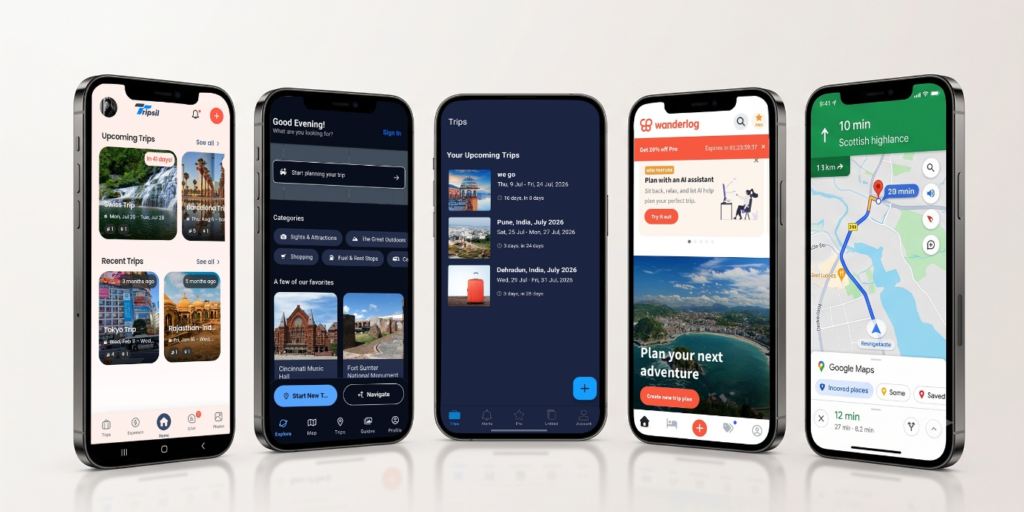
Choosing the right travel planning application depends on your travel style, budget, and requirements. Some tools are designed for building itineraries, while others focus on booking management, navigation, or finding affordable flights.
Here are some popular trip planning tools worth considering in 2026.
.trip-planner-section { display: grid; grid-template-columns: repeat(2, minmax(0, 1fr)); gap: 22px; margin: 25px 0; font-family: Arial, sans-serif; } .trip-card { background: #ffffff; border: 1px solid #e5eaf0; border-radius: 12px; overflow: hidden; box-shadow: 0 3px 12px rgba(0,0,0,0.05); transition: transform .25s ease, box-shadow .25s ease; } .trip-card:hover { transform: translateY(-4px); box-shadow: 0 7px 20px rgba(0,0,0,0.09); } .trip-card img { display: block; width: 100%; height: 210px; object-fit: cover; } .trip-card-content { padding: 20px; } .trip-card h3 { font-size: 21px; color: #202b3c; margin: 0 0 9px; } .trip-label { display: inline-block; background: #eaf4ff; color: #1766a5; padding: 6px 11px; border-radius: 5px; font-size: 13px; font-weight: 600; margin-bottom: 12px; } .trip-card ul { padding-left: 20px; margin: 10px 0 16px; } .trip-card li { color: #4c5665; font-size: 14px; line-height: 1.7; margin-bottom: 5px; } .trip-website { display: inline-block; color: #1671b9; font-weight: 600; text-decoration: none; font-size: 14px; } .trip-website:hover { text-decoration: underline; } @media(max-width: 650px) { .trip-planner-section { grid-template-columns: 1fr; gap: 18px; } .trip-card img { height: 200px; } }
1. Wanderlog
Best for overall trip planning- Creates day-by-day travel itineraries.
- Organises attractions on interactive maps.
- Supports collaborative planning with friends.
- Helps manage budgets and travel expenses.

2. TripIt
Best for booking organisation- Organises flight and hotel reservations.
- Combines travel confirmations into one itinerary.
- Helps manage travel schedules.
- Offers additional flight alerts through its paid plan.

3. Google Maps
Best for navigation- Finds nearby attractions, restaurants, and hotels.
- Provides directions and estimated travel times.
- Allows users to save and share locations.
- Supports offline maps in selected areas.

4. Skyscanner
Best for flight comparison- Compares flight options from different providers.
- Helps discover flexible travel dates.
- Offers price alerts for selected routes.
- Also supports hotel and car rental searches.

5. Roadtrippers
Best for road trips- Helps plan driving routes.
- Finds attractions and stops along the way.
- Supports multi-stop road trip planning.
- Helps organise longer driving journeys.

6. Rome2Rio
Best for transport planning- Compares routes between destinations.
- Shows train, bus, flight, ferry, and driving options.
- Helps estimate journey duration and costs.
- Useful for international and multi-city travel.
Here are some popular trip planning tools worth considering in 2026.Note: These tools serve different purposes rather than offering identical features. Free features, subscriptions, and availability may vary by country and platform.
Quick Comparison of the Best Trip Planners
| Trip planner | Best suited for | Main advantage |
|---|---|---|
| Wanderlog | Complete itineraries | Day-wise planning |
| TripIt | Booking management | Organised reservations |
| Google Maps | Navigation | Directions and saved places |
| Skyscanner | Flight searches | Fare comparison |
| Roadtrippers | Driving holidays | Route planning |
| Rome2Rio | Transport searches | Multiple travel options |
How to Plan Your Perfect Trip Step by Step
A successful trip starts with a clear plan. Following a few simple steps can help you organise your journey without making the process complicated.
Step 1: Choose Your Destination
First, decide where you want to travel. Consider your interests, available time, weather conditions, and travel budget.
For example:
- Beach holidays: Goa, Maldives, Bali.
- Mountain adventures: Manali, Kashmir, Switzerland.
- Cultural experiences: Jaipur, Varanasi, Kyoto.
- International city breaks: Singapore, Dubai, Bangkok.
Research the destination before making reservations.
Step 2: Set a Realistic Travel Budget
Decide how much you can comfortably spend on the trip. Divide your estimated budget into different categories:
| Expense | What to include |
|---|---|
| Transportation | Flights, trains, buses, taxis |
| Accommodation | Hotels, resorts, hostels |
| Food | Restaurants and local meals |
| Activities | Tours, tickets, sightseeing |
| Shopping | Souvenirs and personal purchases |
| Emergency fund | Unexpected expenses |
Keeping a separate emergency budget can help you manage unexpected situations.
Step 3: Select Your Travel Dates
Choose dates according to your availability, destination weather, and seasonal demand. Travelling during less crowded periods may help you find better accommodation rates and a more relaxed experience.
Before confirming your dates, check local holidays, festivals, peak seasons, and possible weather disruptions.
Step 4: Compare Flights and Accommodation
Once your dates are finalised, compare different transportation and accommodation options.
Use flight comparison platforms to explore available routes and fares. Compare hotels based on location, facilities, guest reviews, cancellation policies, and total prices.
Avoid choosing accommodation based only on the lowest price. A convenient location can save both time and transportation expenses.
Step 5: Create a Daily Travel Itinerary
Prepare a day-by-day schedule that includes attractions, restaurants, activities, and transportation.
For example, a three-day Jaipur trip could look like this:
Day 1
Explore Jaipur’s Historic Attractions
- Visit Hawa Mahal.
- Explore City Palace.
- Discover Jantar Mantar.
- Enjoy traditional Rajasthani food.
Day 2
Discover Forts and Local Culture
- Visit Amber Fort.
- Explore Jaigarh Fort.
- Experience local markets.
- Enjoy an evening cultural experience.
Day 3
Shopping and Relaxation
- Visit local handicraft shops.
- Explore Johari Bazaar.
- Try local street food.
- Prepare for departure.
Keep some free time in your itinerary instead of scheduling every hour. This gives you flexibility to explore unexpected places.
Step 6: Organise Important Documents
Keep your travel documents accessible before departure. Depending on your destination, these may include:
- Passport and visa documents.
- Flight and hotel confirmations.
- Government-issued identification.
- Travel insurance details.
- Emergency contact information.
- Activity and transportation tickets.
Keep digital copies securely and carry essential documents when required.
Step 7: Check Everything Before Departure
Before leaving, confirm your bookings, check weather forecasts, review transportation schedules, and download offline maps.
A final checklist helps prevent common travel mistakes.
Important Features to Look for in a Trip Planner
Not every travel planning tool offers the same features. Before choosing one, consider the following:
| Feature | Why it matters |
|---|---|
| Itinerary builder | Helps organise daily activities |
| Budget tracker | Monitors travel expenses |
| Map integration | Makes navigation easier |
| Booking management | Keeps reservations together |
| Collaboration | Helps groups plan together |
| Offline access | Useful without internet connectivity |
| Price comparison | Helps compare travel options |
| Custom recommendations | Supports personalised travel plans |
A good trip planner should make travel sanitation easier without creating unnecessary complexity.
How AI Is Changing Trip Planning in 2026

Artificial intelligence is making travel planning more personalised and convenient. AI-powered travel tools can analyse preferences, suggest destinations, and help create customised itineraries.
Some useful applications of AI in travel planning include:
- Personalised Destination Suggestions: AI tools can recommend destinations based on interests, budget, weather, and travel duration.
- Automated Itinerary Creation: Travellers can enter their destination and travel dates to generate a suggested daily schedule.
- Budget Recommendations: AI can help estimate accommodation, transportation, food, and activity expenses.
- Travel Route Optimisation: Smart planning tools can suggest efficient routes between attractions.
- Travel Assistance: AI assistants can help travellers understand local customs, explore activities, and organise important information.
However, AI recommendations should always be checked against current booking information, local conditions, and official travel guidelines.
Best Trip Planning Tips for a Stress-Free Holiday
Even with modern travel applications, a few practical habits can make your journey more comfortable.
- Book in Advance: Reserve flights and accommodation early when possible, especially during peak travel seasons.
- Travel Light: Carry only essential clothing and personal items.
- Check the Weather: Research local weather conditions before packing.
- Keep Backup Documents: Store digital copies of important travel documents securely.
- Understand Local Transportation: Research public transport, taxis, and other available options.
- Avoid Overplanning: Leave enough time for relaxation and unexpected experiences.
- Check Travel Insurance: Understand what your policy covers before departure.
- Respect Local Culture: Learn about local customs, traditions, and travel rules.
Common Mistakes to Avoid While Planning a Trip

Some travel mistakes can increase expenses and create unnecessary problems. Here are a few things to avoid:
- Booking hotels without checking their location.
- Ignoring cancellation and refund policies.
- Planning too many activities in one day.
- Forgetting transportation costs.
- Not checking passport and visa requirements.
- Depending entirely on internet connectivity.
- Ignoring local weather conditions.
- Travelling without an emergency budget.
Preparing for these situations can make your holiday more organised and enjoyable.
Conclusion
Planning a memorable holiday does not have to be complicated. With the right trip planner, travellers can organise destinations, compare transportation options, manage expenses, and create personalised itineraries more efficiently.
Tools such as Wanderlog, TripIt, Google Maps, Skyscanner, Roadtrippers, and Rome2Rio offer different features for different travel requirements. The best choice depends on whether you need itinerary management, flight comparisons, booking sanitation, or navigation.
In 2026, combining digital travel planning tools with proper research and flexible scheduling can help you enjoy a smoother journey. Start with a clear destination, prepare a realistic budget, and organise your itinerary to make the most of every travel experience.
Frequently Asked Questions
1. What is the best trip planner in 2026?
Wanderlog is a popular option for organising complete itineraries, while TripIt is useful for managing bookings. Google Maps is helpful for navigation.
2. Are there any free trip planning apps?
Yes. Google Maps, Rome2Rio, Skyscanner, and the free versions of Wanderlog and TripIt offer useful travel planning features.
3. Can AI plan an entire trip?
AI tools can suggest destinations, create draft itineraries, and estimate budgets. However, travellers should verify bookings, opening hours, and travel requirements independently.
4. How can I plan a trip on a low budget?
Compare transportation prices, choose affordable accommodation, travel during less busy periods, use public transportation, and monitor daily expenses.
5. What should I include in a travel itinerary?
Include travel dates, transportation details, accommodation, sightseeing activities, restaurant options, estimated expenses, and emergency contacts.

Krati
Writes for OfferDeals.